Author: Sumit, Head of Grooming at Furrvy
Sumit has groomed dogs for 5 years, the last 1.5 at Furrvy, and de-mats coats often enough to know prevention is always easier than the fix.
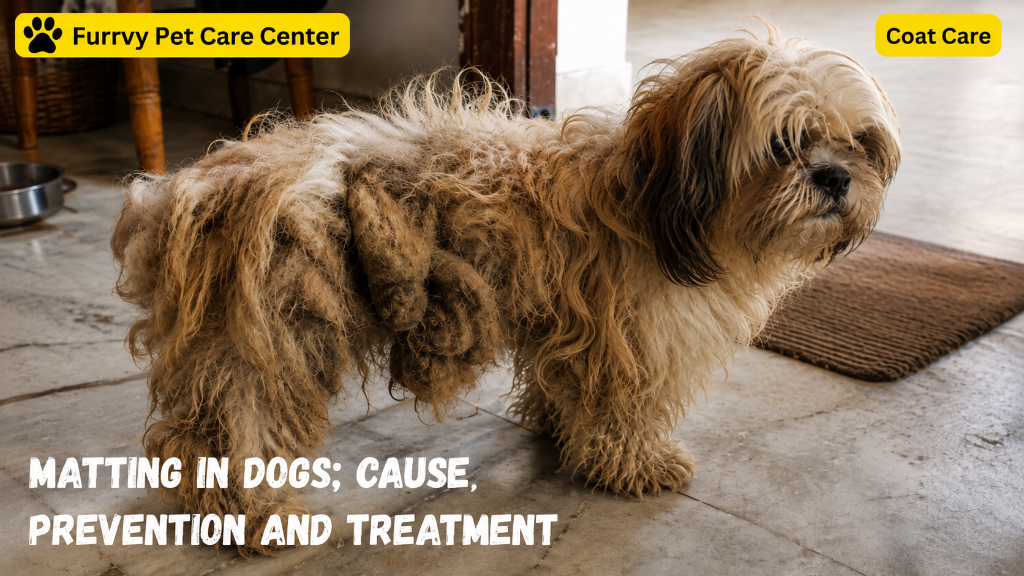
Matting is generally caused by infrequent brushing, moisture, and friction against the coat, and it tends to build up faster in certain coat types than others. Regular brushing is usually the simplest and most comfortable way to prevent it, since treating heavy matting once it has formed can sometimes require clipping for the dog’s comfort.
Furrvy is a pet daycare and boarding centre in Gurgaon (also Gurugram) with centres in Sector 58 and Sector 27, with in house grooming at both.
Quick Facts: Matting
| Factor | Detail |
|---|---|
| Common causes | Infrequent brushing, moisture, friction |
| Highest risk coats | Curly, long, or double coated breeds |
| Best prevention | Regular brushing, appropriate to coat type |
| Severe matting treatment | May require clipping for comfort |
| Where mats form most | Behind ears, under legs, around the collar |
What Causes Matting in Dogs?
Matting is generally caused by loose hair tangling together, made worse by infrequent brushing, moisture from baths or rain, and friction from a collar, harness, or a dog’s own movement. Curly, long, and double coated breeds tend to be more prone to it than short coated dogs, simply due to how their coat behaves.
Left unaddressed, small tangles can gradually grow into larger, tighter mats that sit closer to the skin.
Where Do Mats Typically Form?
Mats commonly form behind the ears, under the legs, around the collar area, and anywhere there is regular friction or moisture. These are the spots worth checking most often between full grooming sessions.
If you notice a small tangle in one of these areas, addressing it early with gentle brushing is far easier than waiting until it has tightened further.
How Can You Prevent Matting?
Regular brushing, at a frequency suited to your dog’s specific coat type, is generally the most effective way to prevent matting from forming in the first place. Double coated and curly coated breeds typically need more frequent brushing than short coated dogs.
Drying your dog thoroughly after a bath or swim also helps, since matting tends to form more easily in damp fur.
What Happens If Matting Is Left Untreated?
Untreated matting can pull on the skin, trap moisture and dirt underneath, and become increasingly uncomfortable for the dog over time. In more severe cases, matted fur close to the skin can also make it harder to spot underlying skin issues.
This is not usually an emergency, but it is worth addressing before it progresses rather than after it becomes extensive.
How Is Severe Matting Treated?
Light matting can often be carefully brushed out, but more severe matting sometimes needs to be clipped rather than brushed, since forcing a brush through tight mats close to the skin can cause pain. This is a welfare decision made for the dog’s comfort, not a shortcut.
If your dog has developed significant matting, a groomer can assess the safest way to address it during a session rather than attempting a full brush out that could cause discomfort.
Is Matting More Common in Certain Weather?
Matting can be more likely during humid or rainy periods, since moisture in the coat makes hair more prone to tangling. The American Kennel Club notes that regular brushing becomes especially important during damp weather for coat types prone to matting.
Frequently Asked Questions
What causes matting in dogs?
Infrequent brushing, moisture, and friction against the coat, with curly, long, and double coated breeds most prone to it.
How can I prevent matting?
Regular brushing suited to your dog’s coat type, and thorough drying after baths or swims.
Is matting painful for dogs?
It can become uncomfortable if left untreated, since mats pull on the skin and trap moisture underneath.
Can matting always be brushed out?
Light matting often can be. Severe matting sometimes needs clipping instead, for the dog’s comfort and safety.
Where do mats form most often?
Behind the ears, under the legs, and around the collar area, where friction and moisture are highest.
Book a Grooming Session
Furrvy offers grooming and de-matting at its Sector 58 and Sector 27 centres in Gurgaon, always handled with the dog’s comfort in mind. To book, message us on WhatsApp: 💬 6355093941.
Related reading: Dog Grooming Cost in Gurgaon | How Often Should You Groom Your Dog | De-Shedding, Tick and Flea Treatment | Summer Grooming for Dogs in Gurgaon